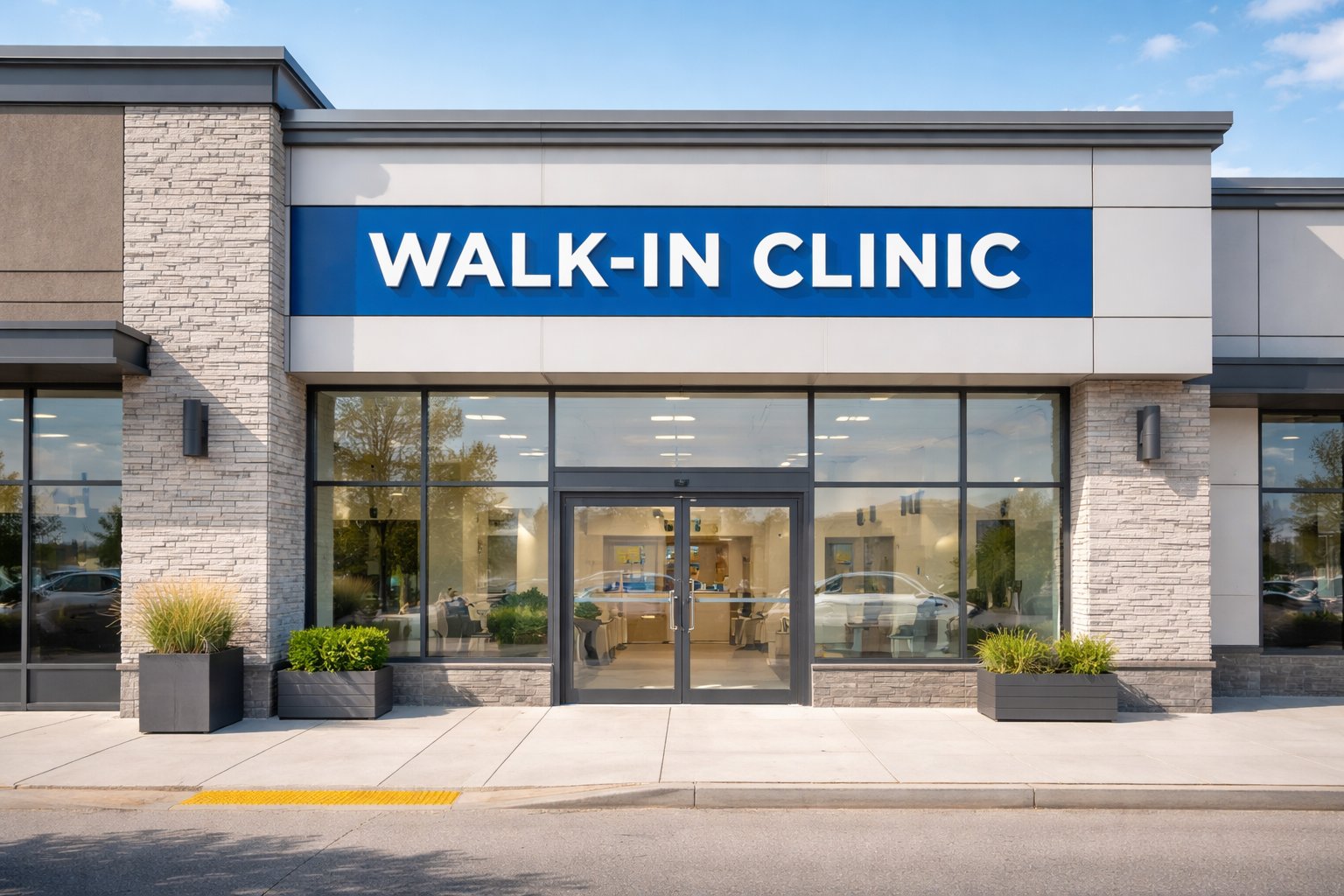
Walk-in and urgent care clinics live and die by their location in a way that few other healthcare uses do. Patients rarely book these visits in advance; they choose a clinic because they saw it, passed it, or found it moments before they needed care. That makes real estate strategy inseparable from clinical strategy — and it means the site you choose and the lease you sign will shape your patient volumes for years.
Why Location Logic Is Different for Walk-In and Urgent Care
Most healthcare tenants can rely on referrals, appointments, and reputation to fill their schedules. Walk-in and urgent care operators depend far more on visibility and convenience. The ideal site behaves almost like a retail location: high vehicle and pedestrian traffic, a recognizable intersection or corridor, and a storefront that reads as "open and accessible" from the road.
Ground-floor exposure matters enormously. A clinic tucked into an upper floor or an interior medical suite loses the impulse and convenience traffic that drives this model. Look for locations where a patient can see the entrance, understand where to park, and get inside quickly — often while feeling unwell or managing a child or an aging parent. In both Ontario and Alberta markets, from Toronto and Ottawa to Calgary and Edmonton and their surrounding suburbs, the strongest sites tend to sit along established retail and commuter corridors rather than in quiet office parks.
Reading the Trade Area and Co-Tenancy
The tenants around you can be as valuable as the address itself. Strong co-tenancy — particularly a pharmacy, and often a grocery anchor — creates a natural care ecosystem. Patients leaving a walk-in visit frequently need a prescription filled, and a neighbouring pharmacy turns that into a seamless step rather than a second errand across town.
When evaluating a site, weigh these factors together:
- Visibility and signage potential — sightlines from the road, pylon or fascia signage rights, and how the unit presents after dark
- Traffic and access — proximity to major intersections, transit, and turning movements that make it easy to pull in
- Co-tenancy strength — pharmacy, grocery, and complementary health or convenience uses that reinforce foot traffic
- Parking — dedicated, accessible, close-to-entrance stalls, including barrier-free spaces
- Demographics and demand — residential density, family populations, and gaps in nearby after-hours care
No single factor carries a site. A location with excellent visibility but no parking, or strong demographics but poor signage rights, will underperform against a more balanced option.
Lease Provisions That Protect a Clinic's Model
A favourable location can still be undermined by a weak lease. Because walk-in and urgent care operations have specific operational needs, several provisions deserve careful negotiation before signing.
Permitted use should be drafted broadly enough to cover the full scope of services you intend to offer, including any diagnostic or ancillary services, so you are not renegotiating with a landlord every time your model evolves. Signage rights should be explicit — fascia, pylon, and directional signage all directly affect the visibility your site depends on. Parking provisions should confirm the count, location, and accessibility of stalls, and address whether they are exclusive or shared.
The relationship with a neighbouring pharmacy also warrants attention. Some landlords or pharmacy tenants seek exclusivity clauses; understanding how these interact with your clinic's dispensing arrangements, referral patterns, and any co-located pharmacy is essential. Finally, walk-in and urgent care hours often extend beyond a typical retail plaza's schedule, so confirm after-hours HVAC availability, the cost of running it, and access rights for staff and patients during evenings and weekends.
Building a Multi-Site Network
Operators expanding from one clinic to several face a different set of questions. Network growth is not simply repeating a good site — it is building coverage that avoids self-competition while capturing distinct trade areas. Thoughtful spacing between locations keeps each clinic drawing from its own catchment rather than cannibalizing a sister site.
Consistency also becomes a strategic asset. Standardized site criteria, repeatable lease terms, and predictable buildout requirements let a network move faster and negotiate from a stronger position as it grows. Across Ontario and Alberta, the two provinces differ in regulation, market structure, and growth patterns, so a network strategy that works in the Greater Toronto Area may need adjustment for Calgary or Edmonton. Planning expansion with local market knowledge in each province prevents costly missteps and helps sequence new sites in a deliberate order.
How PRAXIS Helps
PRAXIS Healthcare Real Estate advises walk-in and urgent care operators and networks on every stage of this process — from identifying and evaluating sites to negotiating the lease provisions that protect your model and planning multi-site expansion across Ontario and Alberta. Led by Mya Qi, MPH, and licensed in both provinces, PRAXIS brings a healthcare-specific perspective that generalist brokers often miss. If you are considering a new location or building out a clinic network, reach out to start the conversation.