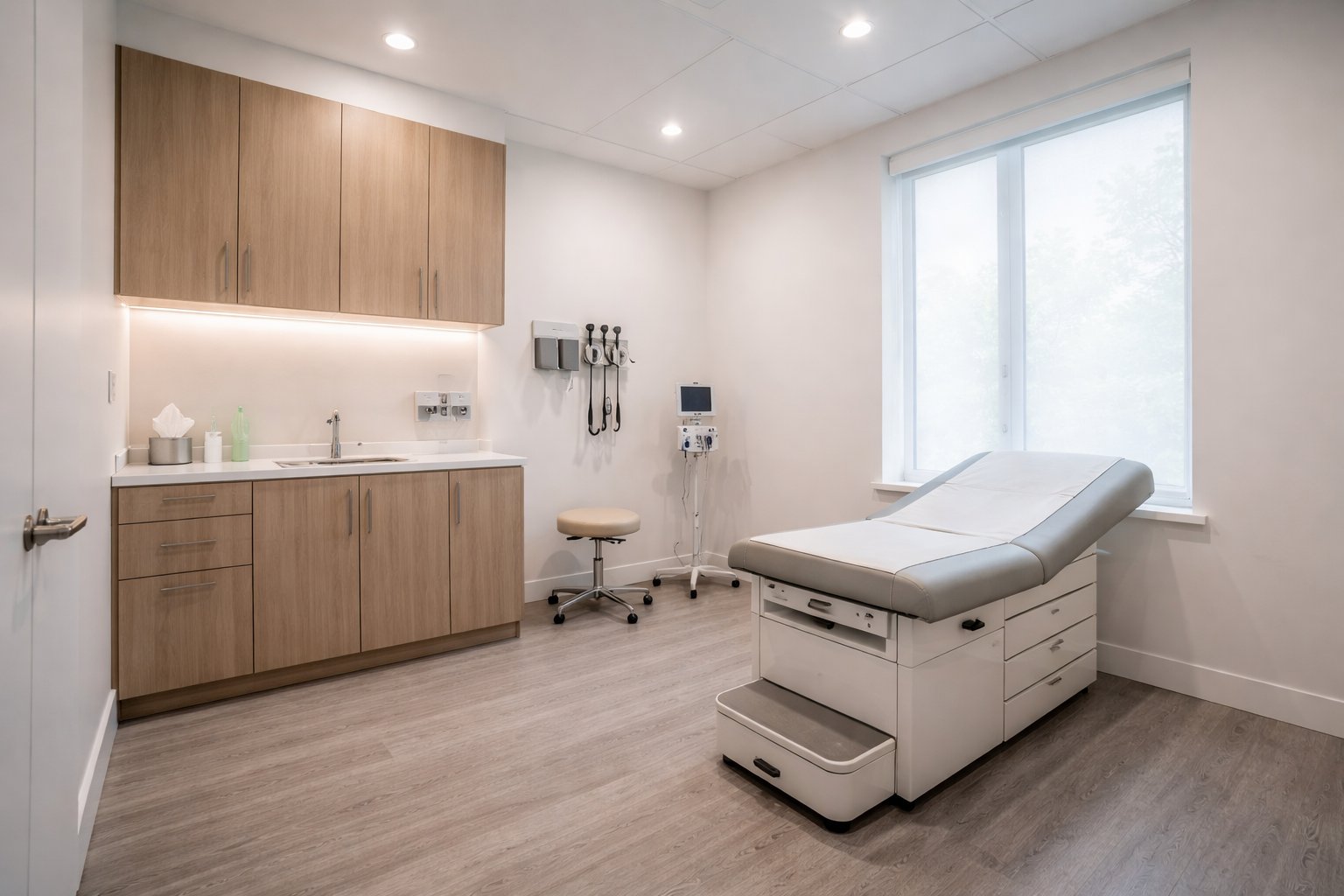
Most physicians approach a commercial lease the way they might approach any contract that stands between them and opening their doors: sign quickly, move in, start treating patients. Yet a medical practice lease is one of the largest and longest financial commitments a physician will ever make, and its clauses quietly govern everything from your patient flow to the value of your practice when you eventually sell or retire. The provisions below are the ones that most often determine whether a lease supports a thriving clinic or slowly constrains it — and they are precisely where healthcare-specialized advisory earns its keep.
1. Term and Renewal Options
The initial term sets your commitment; the renewal options protect your future. A medical practice builds enormous location-based goodwill — patients associate you with an address, referral patterns form around it, and relocating can mean losing a portion of your book. Securing multiple renewal options, with clearly defined notice periods and a transparent mechanism for setting renewal rent, keeps control of that goodwill in your hands rather than the landlord's at each expiry.
2. Rent Structure and Escalations
Beyond the base rent, you need to understand exactly how costs rise over time. Escalations may be fixed, tied to an index, or set to market — each carries a very different long-term profile. Modelling the fully-committed occupancy cost across the entire term, escalations included, is essential; a rate that looks competitive today can compound into a serious burden by year five or ten if the escalation structure is left unexamined.
3. Tenant Improvement Allowance and Fixturing Period
Medical build-outs are expensive — plumbing for exam rooms, lead-lined walls, enhanced electrical and HVAC, and accessibility features far exceed a typical office fit-out. A tenant improvement allowance offsets that cost, and a fixturing (or free-rent) period gives you time to build before rent begins. Allowances and fixturing terms vary widely by market and deal, and both are typically negotiable; getting them right can materially change the capital you must invest up front.
4. Permitted Use and Exclusivity
The permitted use clause defines what you may legally do in the premises — it must be broad enough to cover your specialty today and any services you may reasonably add later. An exclusivity provision, meanwhile, can prevent the landlord from leasing nearby space to a competing practice. In a medical building, exclusivity protects your patient base and referral flow, and it is far easier to negotiate before you sign than after.
5. Assignment, Subletting, and Transfer on Practice Sale
One day you will want to sell, merge, or wind down your practice, and your lease is part of what you are selling. If the assignment clause lets the landlord withhold consent unreasonably or capture any gain on transfer, it can complicate or devalue a sale. Negotiating a clear right to assign the lease to a qualified purchaser — ideally with the landlord's consent not to be unreasonably withheld — protects the eventual exit value of your practice.
6. Restoration and Make-Good Obligations
At lease end, restoration clauses can require you to remove your improvements and return the space to base condition. For a medical fit-out, that demolition can be surprisingly costly. Clarifying exactly what must be removed — and negotiating to leave compliant improvements in place — prevents an unwelcome surprise at the very moment you are trying to exit cleanly.
7. HVAC and After-Hours Servicing
Clinical environments depend on reliable climate control for patient comfort, equipment tolerances, and sometimes medication or specimen storage. Confirm who is responsible for the HVAC system's maintenance, repair, and eventual replacement, and understand the cost and availability of after-hours servicing if you run extended clinics. An aging rooftop unit that becomes your responsibility can quietly become a major liability.
8. Demising and Expansion Rights
Practices grow. A right of first offer or first refusal on adjacent space lets you expand without relocating, while clear demising terms define exactly what you are — and are not — paying for. Building expansion optionality into the lease at the outset is far cheaper than trying to find contiguous space years later when your patient volume has outgrown your rooms.
9. Relocation Clauses
Some leases grant the landlord the right to relocate your practice within the building or complex. For most businesses this is an inconvenience; for a medical practice with fixed plumbing, imaging shielding, and a location-anchored patient base, a forced move can be devastating. These clauses should be resisted, narrowed, or made subject to full compensation and your consent wherever possible.
10. Personal Guarantees and Indemnity
Landlords frequently ask physicians to personally guarantee the lease or provide an indemnity, putting personal assets behind the corporate tenant. The scope and duration of any guarantee deserve careful scrutiny — burn-off provisions that reduce or release the guarantee over time, or caps on exposure, are commonly negotiable and can meaningfully limit your personal risk.
11. Accessibility Compliance (AODA / Alberta Standards)
In Ontario, the Accessibility for Ontarians with Disabilities Act sets requirements that affect medical premises; Alberta practices face comparable obligations under the Alberta Building Code and human rights framework. The lease should make clear whether responsibility for accessibility compliance and any required upgrades rests with landlord or tenant — an allocation with real cost consequences for a clinic serving patients with mobility needs.
12. Operating Cost and CAM Audit Rights
In most commercial leases you pay a share of the building's operating costs, or common area maintenance, on top of base rent. These pass-through charges can drift upward year over year, sometimes including items that ought not to be there. An audit right — the ability to inspect and verify the landlord's operating-cost calculations — is your safeguard against overpaying, and it is a provision worth securing in writing.
A final word: every point above is a commercial real estate consideration, not legal advice. Lease language is technical and jurisdiction-specific, and you should always have a qualified commercial real estate lawyer review the final document before you sign.
How PRAXIS Helps
PRAXIS Healthcare Real Estate represents physicians — never landlords — in negotiating the terms that shape a practice's operational and financial health across Ontario and Alberta. Led by Mya Qi, MPH, we understand both the clinical realities of a medical build-out and the commercial levers that protect your investment and your eventual exit. If you are evaluating a new lease, a renewal, or a relocation, we invite you to reach out to PRAXIS for a confidential, no-obligation conversation before you sign.