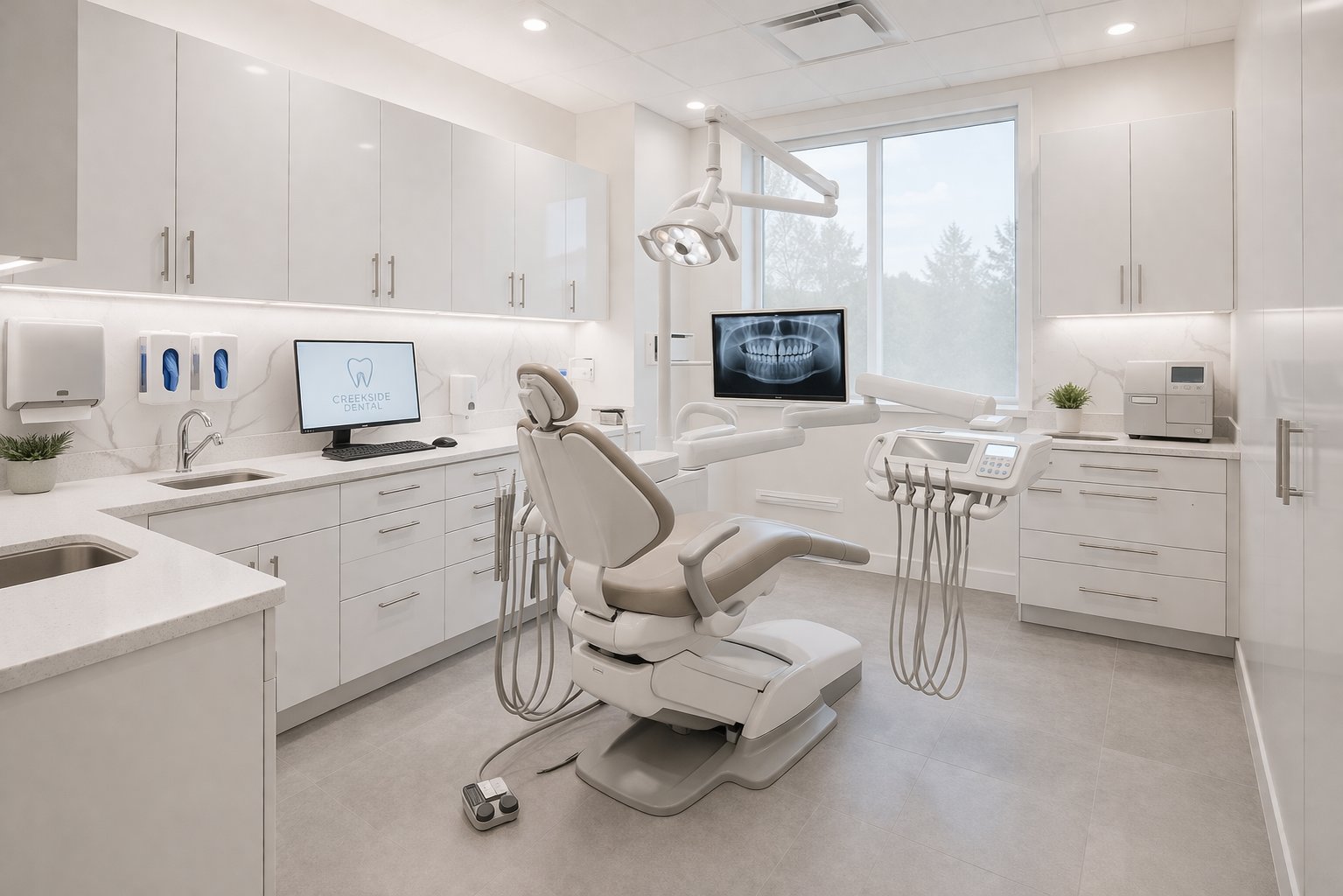
A dental practice is one of the most capital-intensive and technically demanding tenancies in all of healthcare real estate. Between compressed air and vacuum systems, extensive plumbing, imaging shielding, and sterilization suites, a dental fit-out sits far closer to a light-industrial build than to a typical professional office. Whether you are an associate signing your first lease, a DSO expanding across markets, or an investor underwriting a dental tenant, understanding these demands before you sign protects both your capital and your ability to practise.
Why a Dental Space Is Not Just Office Space
Most landlords price and market clinical suites as general office, but a dental operatory imposes structural and mechanical requirements a standard tenant never faces. Each chair needs pressurized water, drainage, compressed air, and suction, all routed through the floor or ceiling to every operatory. Add x-ray and CBCT imaging, a dedicated sterilization room, and elevated electrical and mechanical loads, and you have a build-out that is both time-consuming and significant in cost. That cost varies widely with the number of operatories, the base condition of the space, and local code, so treat any single figure you hear as a starting point for investigation rather than a fact.
The Technical Build-Out Requirements
Before committing to a space, have a dental-experienced contractor and mechanical engineer assess whether the premises can actually accommodate a clinic. The core requirements typically include:
- Compressed air and vacuum/suction lines run to every operatory, with a mechanical room to house the compressor and vacuum pump (and the noise and ventilation they demand).
- Water and plumbing for multiple operatories, including hot water, drainage, and often amalgam separators to meet wastewater rules.
- Lead-lined or code-compliant shielding for x-ray and imaging rooms, with radiation protection verified to provincial requirements.
- A dedicated panoramic/CBCT imaging area sized and shielded for the equipment, with adequate power and clearance.
- A sterilization and instrument reprocessing room with a clean-to-dirty workflow, extra plumbing, and ventilation.
- Upgraded electrical and mechanical capacity — many operatories, imaging units, and HVAC often exceed what a base building provides, requiring a service upgrade.
- Accessibility compliant with the AODA in Ontario or Alberta's barrier-free requirements, plus the applicable building code, for entrances, washrooms, and treatment areas.
Confirm early whether the base building can even deliver the electrical service, floor loading, plumbing stacks, and rooftop or exterior space for mechanical equipment. Discovering a limitation after signing is expensive and can be fatal to a project.
Lease Provisions That Protect the Practice
The physical build is only half the equation; the lease language determines whether your investment is safe. Because a dental fit-out is costly and largely immovable, the term must be long enough to reasonably amortize the build-out, ideally with renewal options that extend your horizon. A tenant improvement (TI) allowance from the landlord can offset construction, but amounts vary and are negotiated case by case, so weigh any allowance against the rent and term offered.
Pay close attention to these clauses:
- Exclusivity and permitted use — an exclusivity provision preventing the landlord from leasing to a competing dental practice in the same building or plaza can be crucial in a multi-tenant property, and the permitted-use clause should be broad enough to cover your services.
- Fixturing period — free or reduced rent during construction, since a dental build-out can take months before you see a patient.
- Assignment on practice sale — the right to assign the lease to a buyer is essential to your exit; a practice is far harder to sell if the lease cannot transfer on reasonable terms.
- Restoration and surrender — clarify whether you must remove specialized improvements and restore the premises at the end of term, as this obligation can be substantial given the mechanical and shielding work involved.
Every one of these provisions carries financial consequences, and the standard landlord form rarely favours a clinical tenant. Independent legal and professional review before signing is not optional.
Specialists Have Different Needs
Not every dental tenant is alike. Orthodontic clinics often use large open bays and may need less imaging shielding but more square footage and visibility. Oral and maxillofacial surgeons frequently require surgical suites, higher-grade mechanical systems, sedation and recovery areas, and sometimes medical-gas provisions. Pediatric practices prioritize open layouts, waiting-area design, and patient flow. Match the space and the lease to the specific specialty rather than assuming a general-dentistry template will fit.
Lease, Purchase, or Develop
Leasing offers flexibility and lower upfront capital, which suits associates and groups testing new markets. Purchasing a unit or building lets you control your premises and build equity, and it can align real estate ownership with the practice for long-term planning. Ground-up development or major conversion gives the most control over the technical requirements above but carries the most complexity, timeline, and risk. The right path depends on your capital, growth plans, and how long you intend to occupy the space; there is no single correct answer for every dentist or group.
How PRAXIS Helps
PRAXIS Healthcare Real Estate advises dentists, specialists, DSOs, and investors across Ontario and Alberta on leasing, purchase, and development, with attention to the technical and lease details that make or break a clinic. Led by Mya Qi, MPH, we help you evaluate space, negotiate terms that protect your build-out, and coordinate with your legal and design advisors. Reach out to PRAXIS to discuss your next dental location before you sign.