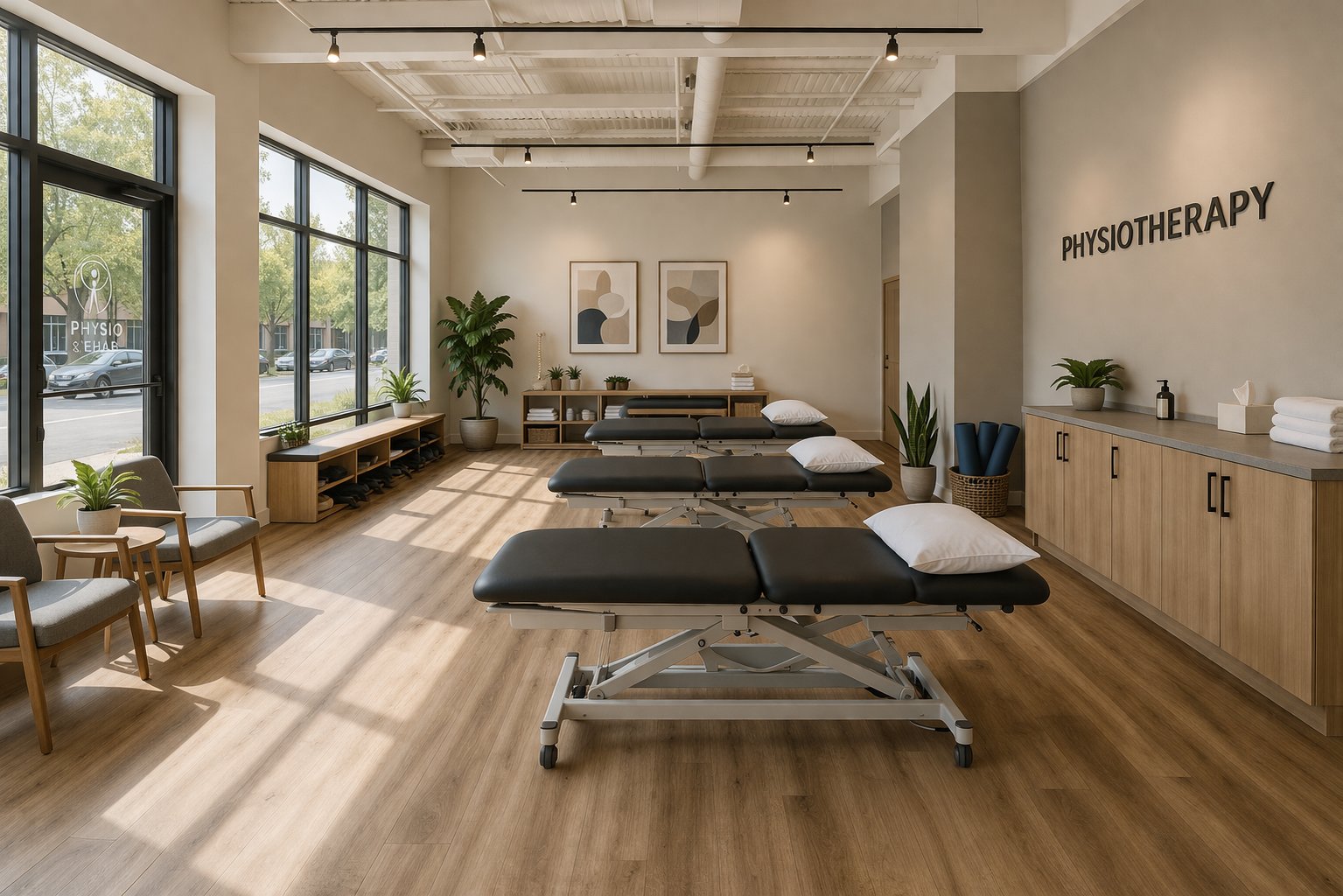
Allied health practitioners often assume that any well-located commercial unit will suit a clinic, only to discover mid-buildout that the space cannot carry the equipment, dampen the sound, or accommodate the accessible washroom their regulator and patients expect. Physiotherapy, chiropractic, occupational therapy, psychology, speech-language pathology, and naturopathic practices each impose distinct demands on a building — and most landlords do not accommodate those demands by default. Understanding what to program into your space and what to negotiate into your lease before you sign is the difference between a smooth opening and an expensive surprise.
Start With Space Programming, Not Square Footage
Before you tour a single unit, translate your clinical model into a room-by-room program: how many treatment rooms or bays, whether you need an open exercise area, reception and waiting capacity, administrative offices, storage, and staff and patient washrooms. Layer in accessibility from the outset — barrier-free paths of travel, accessible washrooms, and clear door widths are baseline expectations in Ontario and Alberta, and retrofitting them into a poorly chosen shell is costly.
The disciplines diverge sharply here:
- Physiotherapy typically needs an open gym or exercise floor plus private treatment bays. Watch floor loading capacity for heavy equipment, and confirm plumbing and drainage capacity if you intend to offer hydrotherapy or a wet treatment area.
- Chiropractic centres on multiple treatment rooms sized for tables and adjusting, with early consideration of on-site imaging — X-ray rooms carry shielding, electrical, and regulatory requirements that shape the floor plan.
- Psychology and mental health practices live or die on acoustic privacy. Sound isolation between rooms and corridors, and a discreet exit path so departing clients do not cross paths with those waiting, are clinical and ethical necessities, not luxuries.
- Speech-language pathology and occupational therapy need purpose-programmed rooms — quiet assessment spaces, sometimes observation capability, and for OT, room to simulate daily-living tasks or accommodate paediatric and sensory equipment.
Programming first lets you screen sites against real requirements rather than falling for a space that shows well but works poorly.
Get the Permitted Use and Exclusivity Right
The permitted use clause defines what you are legally allowed to do in the premises. It should describe your clinical services broadly enough to cover reasonable growth — adding a modality, a discipline, or a treating practitioner — without requiring a fresh negotiation. A narrow use clause can trap you.
Confirm early that zoning and the landlord's rules actually allow a health clinic at that address; do not rely on assumptions. In multi-tenant medical or retail settings, ask whether the landlord will grant an exclusivity provision protecting you from a directly competing clinic moving in next door, and check whether any existing tenant already holds an exclusive that would block your use. Exclusivity is worth raising even when it feels premature.
Negotiate the Provisions That Actually Affect Clinics
Standard commercial leases are written for generic office or retail tenants and rarely anticipate a clinic's operating pattern. The provisions worth close attention include:
HVAC and after-hours service. Clinics often run early mornings, evenings, and weekends. Understand how heating and cooling are supplied, whether after-hours HVAC carries an extra charge, and whether the base system can handle the ventilation and comfort your treatment rooms require.
Signage. Patient wayfinding matters. Clarify your rights to exterior signage, pylon or directory listings, and window graphics, and confirm what landlord and municipal approvals apply.
Parking and accessibility. Assess patient and staff parking, accessible spaces, and proximity of accessible entrances — particularly for physiotherapy and chiropractic patients with mobility limitations.
Fixturing period and improvements. Negotiate a rent-free fixturing period for buildout, and clarify who owns and pays for improvements, what the landlord will contribute, and what you must remove or restore at the end of the term.
Restoration and assignment. Understand your obligations at lease-end and your ability to assign or sublet if you sell the practice or relocate.
Every one of these clauses carries financial and operational weight, and the language matters more than the headline rent.
Choose the Site With the Whole Practice in Mind
Site selection balances visibility, accessibility, referral proximity, and the physical suitability of the building. A ground-floor unit with parking and a barrier-free entrance often serves a physiotherapy or chiropractic practice better than a more prestigious upper-floor address. Mental health practices may prioritize a quieter, more private setting over high foot traffic. Consider proximity to referral sources, transit, and complementary practitioners — and weigh the true cost of buildout in a raw shell against a second-generation clinic space where some infrastructure already exists.
Have the Right Professionals Review Before You Sign
A lease is a multi-year financial commitment, and clinic-specific provisions are easy to misjudge. Engage a lawyer to review the lease, and involve a designer or contractor early to confirm the space can physically accommodate your program before you are bound. Independent professional and legal advice is essential; this article is general information, not legal advice, and no substitute for guidance tailored to your practice and jurisdiction.
How PRAXIS Helps
PRAXIS Healthcare Real Estate, the healthcare practice of Lucero Commercial Group, works with allied health practitioners across Ontario and Alberta to find, program, and negotiate clinic space that fits how you actually practise. Led by Mya Qi, MPH, our team understands both the clinical and the commercial side of a clinic lease. If you are opening or expanding a practice, reach out to PRAXIS for a confidential conversation about your space and site strategy.