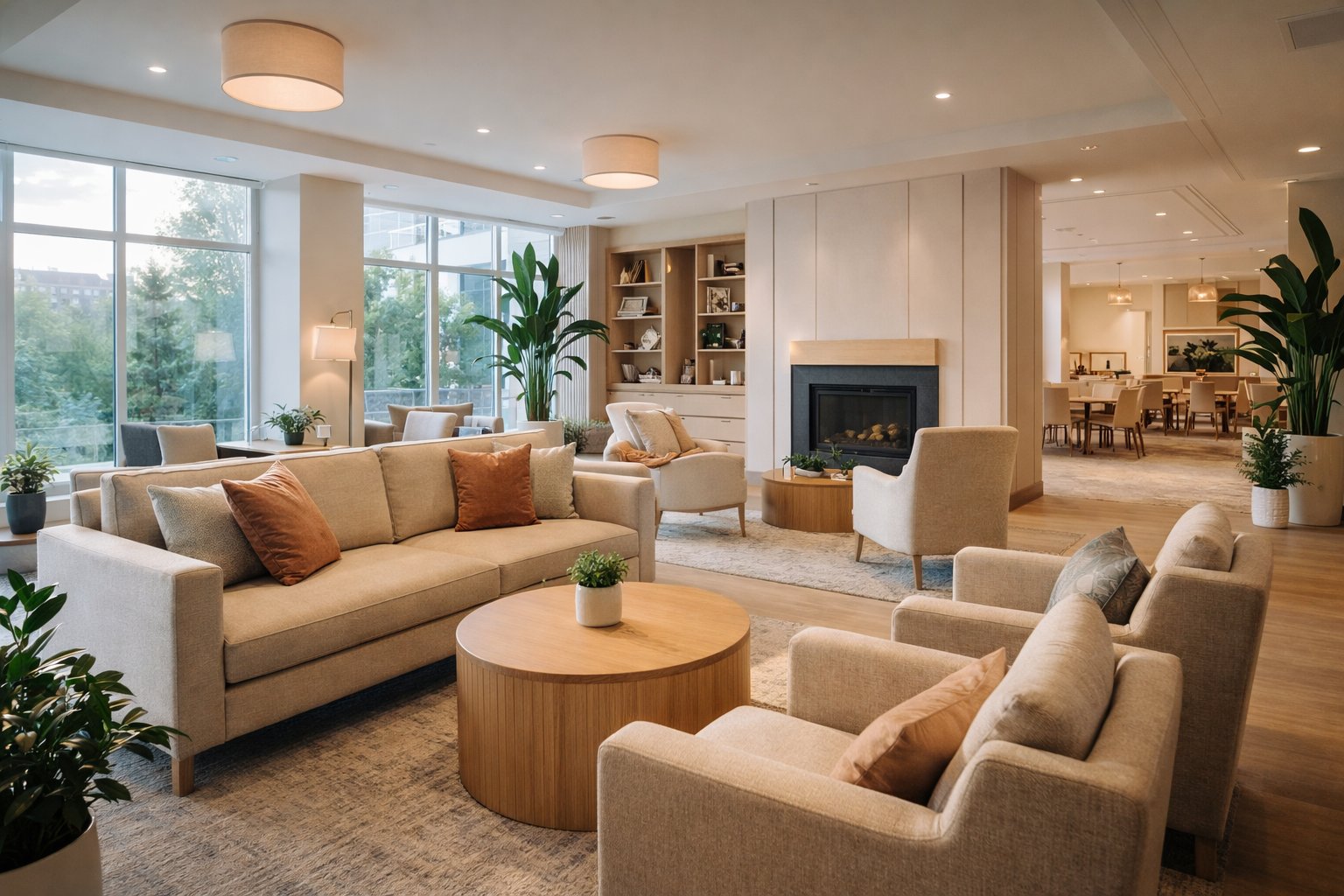
The Canadian retirement residence sector is approaching a supply-demand inflection point that will define one of the most significant real estate development and investment opportunities of the next decade. The leading edge of Canada's baby boom cohort has entered the age band — 80 to 90 years — where retirement residence and assisted living demand is highest. Behind them, a cohort twice the size continues to age toward the same threshold. The supply of quality retirement residence space across Ontario and Alberta is structurally insufficient to absorb this demographic reality.
Understanding the Asset Class
Retirement residences are distinct from long-term care homes in both regulatory structure and real estate economics. LTC homes in Ontario receive government-funded occupancy revenue for each licensed bed. Retirement residences are regulated under the Retirement Homes Act and the RHRA — but revenue is private-pay, drawn from residents' retirement savings and pensions rather than government transfer payments.
This distinction has significant implications for real estate economics. Retirement residence revenue is higher per suite, less politically constrained, and more sensitive to service quality and physical environment — creating strong incentives for premium facility design. It is also more variable than LTC revenue, as occupancy depends on market pricing, location quality, and the competitive landscape of a given catchment area.
"The retirement residence sector is facing a supply deficit that will compound for the next fifteen years. The development and investment opportunity is structural, not cyclical."
Ontario: The RHRA Framework
All retirement residences in Ontario offering personal care or health care services must be licensed by the RHRA. The licensing process involves facility inspection, operator background review, and confirmation the physical plant meets provincial standards. New development must incorporate RHRA physical plant requirements from the earliest design stage — including minimum suite sizes, common amenity provisions, and life safety systems going beyond standard residential construction.
Alberta: The Continuing Care Framework
Alberta's seniors housing regulatory landscape is governed by the Continuing Care Act. Supportive living facilities — Alberta's functional equivalent of Ontario's retirement residences — operate within a tiered care model determining the level of publicly-funded support available to residents. Understanding which tier of supportive living a proposed facility will operate under is essential to modelling the revenue and operating cost structure of an Alberta seniors housing development.
The Development Economics
Purpose-built retirement residence development requires careful site selection, phased development planning, and a realistic assessment of lease-up timelines. Lease-up periods of 24 to 36 months are typical — developers and investors must capitalize projects to absorb this period without distress. Operating cost structures are meaningfully different from conventional commercial real estate, requiring dedicated operating expertise that most real estate developers do not possess in-house.
PRAXIS advises retirement residence developers, operators, and investors on site identification, development feasibility, RHRA licensing strategy, and acquisition mandates. Contact Mya Qi, MPH.


